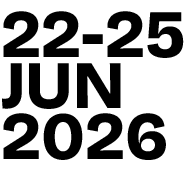

Across the world, local and regional governments are designing new solutions to respond to the major challenges of our time – from democratic renewal and public innovation to climate action, mobility and international cooperation. The UCLG Congress and World Summit of Local and Regional Leaders in Tangier will provide a dedicated space to spotlight transformative initiatives that are redefining how territories collaborate and deliver for their communities.
Through a dynamic series of launches hosted at the Networking Hub, local and regional governments will showcase practical experiences, partnerships and innovative solutions that demonstrate how local action is driving global transformation. From urban diplomacy to democratic innovation, sustainable mobility and new tools for city cooperation, these sessions will offer a window into the World Organization.
From ideas to action: Join the launches at the Networking Hub
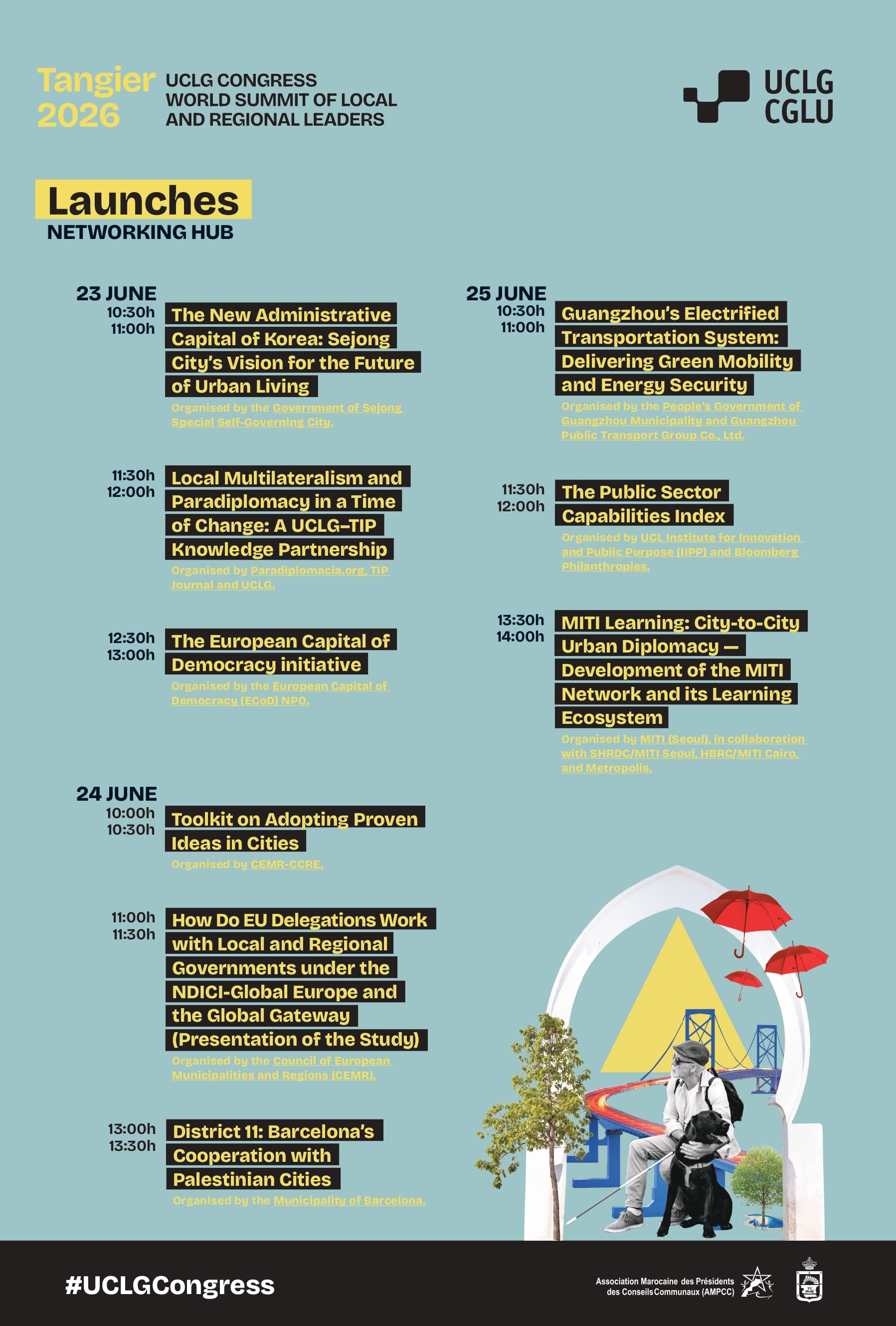
Tuesday 23 June
10:30 – 11:00 | The New Administrative Capital of Korea: Sejong City’s Vision for the Future of Urban Living
This launch will showcase how Sejong Special Self-Governing City is reimagining the future of urban governance through innovative approaches to sustainable urban planning, smart public services and citizen-centered development.
12:30 – 13:00 | The European Capital of Democracy Initiative
This session will highlight how democratic innovation at the local level can strengthen citizen participation, transparency and trust, reaffirming the role of territories as the foundation of democratic governance.
14:30 – 15:00 | Launch of the knowledge partnership Local Multilateralism and Paradiplomacy in a Time of Change
This joint publication by UCLG, Paradiplomacia.org and TIP Journal brings together voices from across five continents to explore how local and regional governments are increasingly shaping international relations through diplomacy, cooperation and knowledge exchange.
Wednesday 24 June
10:00 – 10:30 | Toolkit on Adopting Proven Ideas in Cities
This launch will introduce practical tools designed to help cities replicate successful innovations, accelerating peer learning and strengthening the capacity of local governments to scale transformative solutions across territories.
11:00 – 11:30 | How Do EU Delegations Work with Local and Regional Governments under the NDICI-Global Europe and the Global Gateway
Participants will explore how European Union delegations engage with local and regional governments, identifying opportunities to strengthen multilevel partnerships and reinforce cooperation frameworks for sustainable development.
13:00 – 13:30 | District 11: Barcelona’s Cooperation with Palestinian Cities
Concrete examples of decentralized cooperation will be presented through this initiative, demonstrating how solidarity between territories can strengthen international partnerships and sustain local action even in the most complex political contexts.
Thursday 25 June
10:30 – 11:00 | Guangzhou’s Electrified Transportation System: Delivering Green Mobility and Energy Security
This session will present Guangzhou’s experience in advancing sustainable public transport systems, showcasing how local governments can lead the transition toward green mobility while strengthening energy resilience and improving quality of life.
11:30 – 12:00 | The Public Sector Capabilities Index
Developed by UCL Institute for Innovation and Public Purpose and Bloomberg Philanthropies, this launch introduces a new framework to better understand institutional capacity and strengthen public sector effectiveness in delivering essential services.
13:30 – 14:00 MITI | Learning: City-to-City Urban Diplomacy — Development of the MITI Network and its Learning Ecosystem
This session will showcase how city-to-city learning networks are strengthening international municipal cooperation, fostering peer exchange and building collective capacity for more connected and resilient territories.
These sessions reflect a core message: the future of multilateralism is being built from territories willing to innovate, cooperate and lead change collectively. Across every region, local and regional governments continue to demonstrate that solutions to global challenges emerge when communities are empowered, partnerships are strengthened and knowledge is shared openly.
Further information
- See the agenda of the sessions
- Check out the overall program